



The Future of Enterprise Architecture Isn't About Technology. It's About People.
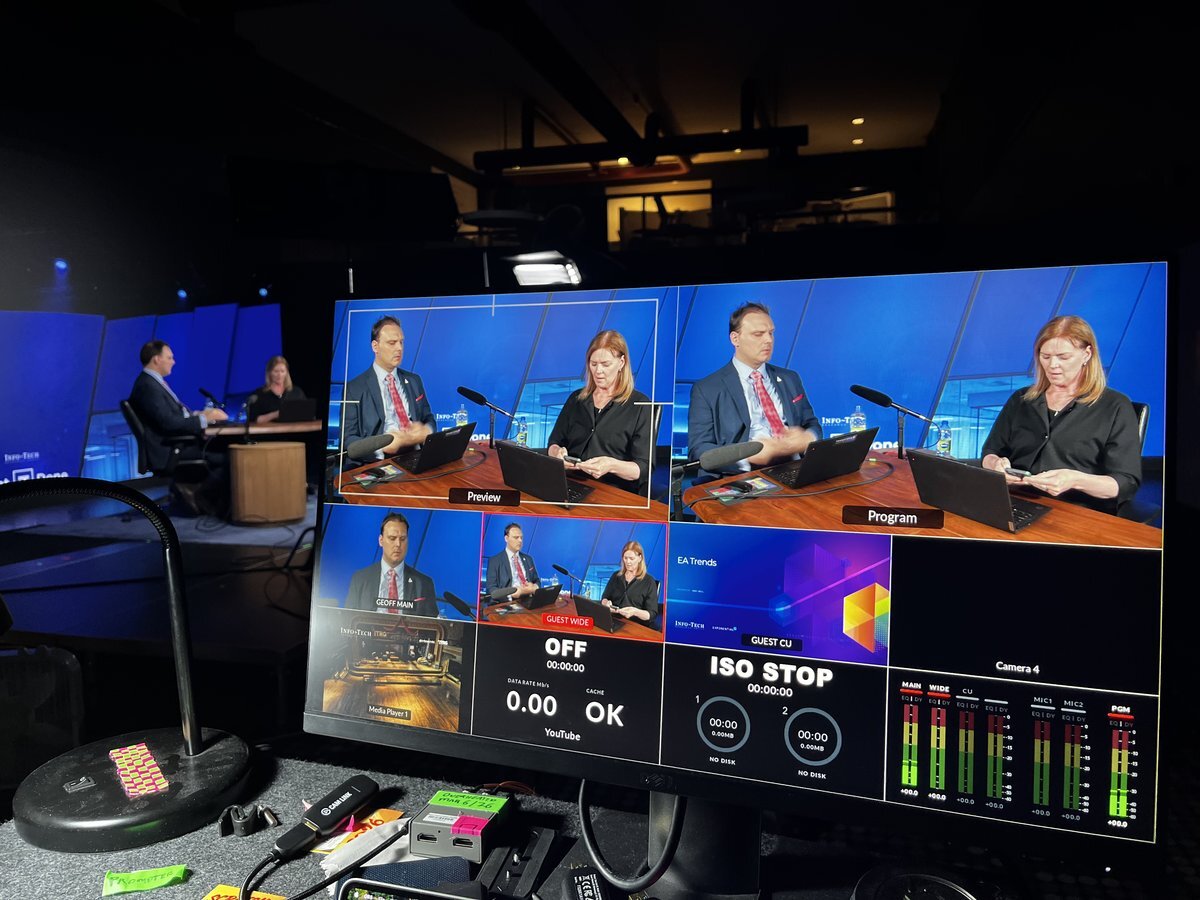
A conversation between Andy Neill, Info-Tech and Brenda Cowie, QualiWare about the 2026 tends in Enterprise Architecture.
When people talk about the future of Enterprise Architecture, the conversation often revolves around AI, automation, governance, and emerging technologies.
And while these topics certainly matter, a recent conversation between Info-Tech Research Group's Andy Neill and QualiWare SVP Brenda Cowie highlighted a different perspective:
The biggest challenge facing Enterprise Architecture today isn't technology. It's people.
From the Plateau of Egotism to the Plateau of Wisdom
One of the most memorable concepts Andy introduced was what he calls the "career wave" of technology professionals.
Early in their careers, architects are eager to learn. They pursue certifications, explore frameworks, and develop deep technical expertise.
As they gain experience and move into leadership positions, some reach what Andy describes as the "Plateau of Egotism"; a stage where they believe they have all the answers and become the smartest person in the room.
The problem? Architecture is no longer a discipline where one person can know everything.
The most successful architects eventually move to what Andy calls the "Plateau of Wisdom." They realize that success comes not from having all the answers themselves, but from bringing together people who collectively do.
In other words, architecture becomes less about expertise and more about enablement.
Enterprise Architecture Is a Team Sport
This theme resurfaced throughout the discussion.
Modern organizations are dealing with increasing complexity. AI, cybersecurity, cloud transformation, regulatory compliance, technical debt, and business transformation all intersect.
No single architect can effectively govern all these domains.
Success depends on collaboration.
As Brenda Cowie pointed out, Enterprise Architecture must become a shared capability rather than a specialist function. Architects, business leaders, data experts, security teams, compliance professionals, and operational stakeholders all need visibility into the same information and contribute to the same outcomes.
Architecture is no longer about creating models for architects.
It's about creating understanding for everyone else.
Why Governance Must Change
The conversation also challenged traditional approaches to governance.
For years, Architecture Review Boards have often been viewed as places where innovation slows down. Teams present ideas and wait for approval. Decisions are centralized. Progress becomes dependent on a small group of experts.
But organizations are increasingly moving toward what Andy described as "federated decision authority."
The principle is simple:
Those closest to the work should be empowered to make decisions.
Architects still play a critical role, but their role shifts from gatekeeper to coach.
Rather than controlling every decision, they establish standards, provide guidance, mentor teams, and help others make better decisions.
This change enables organizations to scale architectural thinking far beyond the architecture team itself.
AI Is Changing the Role of Enterprise Architecture
Of course, no discussion about the future would be complete without AI.
The session explored several emerging AI patterns, including prompt chaining, orchestration workflows, memory-driven systems, and intelligent routing between different AI models.
Yet perhaps the most important insight wasn't about the technology itself.
It was about what AI means for architects.
Historically, architects spent significant time documenting future-state architectures and designing target operating models.
Increasingly, AI can assist with those activities.
What becomes more valuable is maintaining a trustworthy understanding of the current state of the enterprise and ensuring that data, processes, applications, and business capabilities are connected and visible.
The better the architectural foundation, the more effectively organizations can leverage AI.
As Brenda noted, AI doesn't remove chaos, it amplifies it.
Organizations that enter the AI era with fragmented data and disconnected processes risk scaling their problems rather than solving them.
The Skills That Will Matter Most in 2026
Toward the end of the conversation, Andy was asked what capabilities modern enterprise architects should prioritize.
Interestingly, his answer wasn't TOGAF, ArchiMate, or any particular framework.
Instead, he highlighted two areas:
- Business acumen
- Human skills
Can you influence stakeholders?
Can you communicate effectively with executives?
Can you build consensus across teams?
Can you connect technology decisions to business outcomes?
Technical knowledge remains important. But increasingly, it is becoming table stakes.
The architects who will create the most value are those who can connect people, align perspectives, and help organizations navigate change.
Architecture Has Never Been More Important
Enterprise Architecture is evolving.
It is becoming more collaborative, more business-focused, more data-driven, and increasingly augmented by AI.
Yet despite all the technology discussed during the session, the central message remained surprisingly human:
The future of Enterprise Architecture belongs to those who help others succeed.
Not the architects with the most models.
Not the architects with the most certifications.
But the architects who can bring people together, create clarity, and enable better decisions across the enterprise.