



DTO Manufacturing Use Case: Crosby Foods
Guest post by: Mike Haley, VP – DTO Advisory, CBP-Software
Qualiware and CBP earned the only “Ace Performer” designation in QKS Group’s SPARK Matrix evaluation of 19 global DTO solutions. Gartner also lists QualiWare as a technology that supports a Digital Twin of an Organization and will be included in Gartner’s initial DTO Magic Quadrant in mid 2026.
CBP leverages core QualiWare’s functionality to create business operating models that integrate performance, operational, and financial data to improve business and strategic decision-making.
This post presents the approach and benefits derived from a recent manufacturing DTO implementation using QualiWare and CBP.
About Crosby Foods
Crosby Foods is a Canadian Consumer-Packaged Goods (CPG) company that supplies both wet (molasses, inverted sugar) and dry (drink crystals, gelatins, hot chocolate) products to the consumer, the co-manufacturing retail industry and other food manufacturers. Crosby Foods employs over 120 staff across ten discrete production lines making over 160 SKU products.
Problem Addressed
Crosby Foods anticipated that developing a Digital Twin of an Organization (DTO) for their complete business would:
- Support production planning in terms of modeling resource capacity and utilization (e.g., labour, production lines, warehouse space)
- Create a sustainable mechanism for their Continuous Improvement (CI) teams to test future process improvement opportunities
- Provide a methodology for a better understanding and improved accuracy of their product costing and customer profitability analysis
- Create an improved platform for budgetary planning and capital investment justifications
This core DTO capability became critical in helping Crosby Foods manage change with current and prospective customer demands, in terms of volumes and new products.
CBP-DTO Solution/Approach
Crosby Foods utilized CBP to develop a functional DTO of their business. To implement this project, Crosby Foods assembled an internal cross-functional modeling team comprising CI, Production and Finance staff. The project was sponsored by the VP of Operations and the Director of Finance in their roles on the Senior Leadership Team (SLT).
To reduce the complexity of the initial DTO, products were grouped into similar production line characteristics (e.g., production rates, labour requirements, setup/changeover times, and packaging configurations).
Crosby Foods defined 45 unique product groupings for all SKUs in this manner. Key process activities and the resource requirements for each activity supporting the product groups were then identified.
In addition to production line requirements, data was gathered on supporting activities such as production management, warehousing/supply chain, and maintenance. Crosby Foods Continuous Improvement (CI) group was also able to leverage Lean concepts and data in the DTO modeling project.
Corresponding data was collected from various sources including Crosby Foods' ERP (Syspro), electronic production tracking statistics, and production managers.
This data was used to populate the product and process volumetrics, consumption rates, and the model's fixed and variable resource costs. In addition, the capacity levels of each labour group (by shift and the production line) and key production equipment (blenders and packaging lines) were determined and associated with the appropriate fixed resources in the model.
Beyond the process visualizations provided by the DTO modeling solution (see illustrative screenshot in Figure 1), operational and financial results from the DTO were analyzed using Microsoft Power BI for broader management consumption including the SLT (see illustrative screenshot in Figure 2).
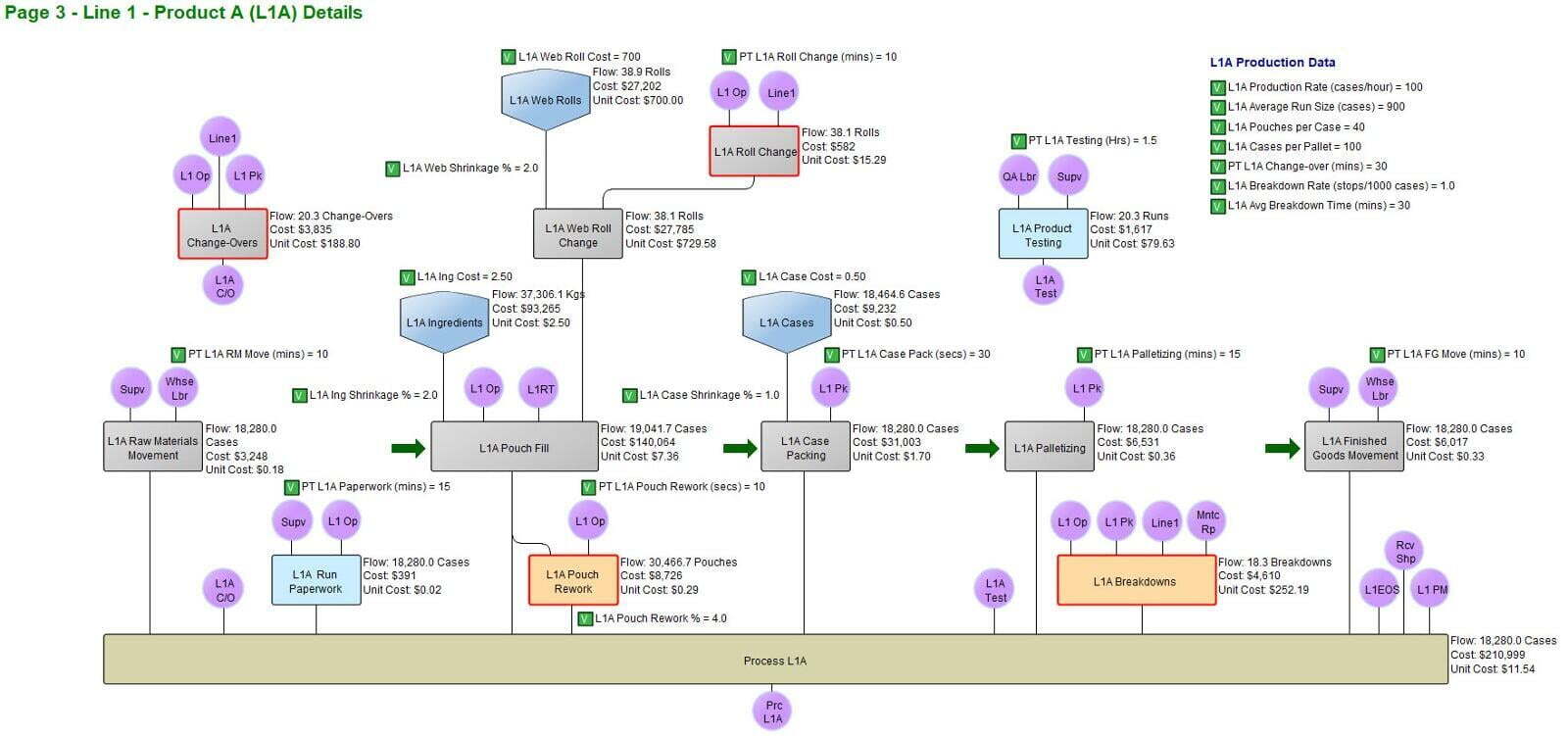
Figure 1. Illustrative Production Line CBP-DTO Model
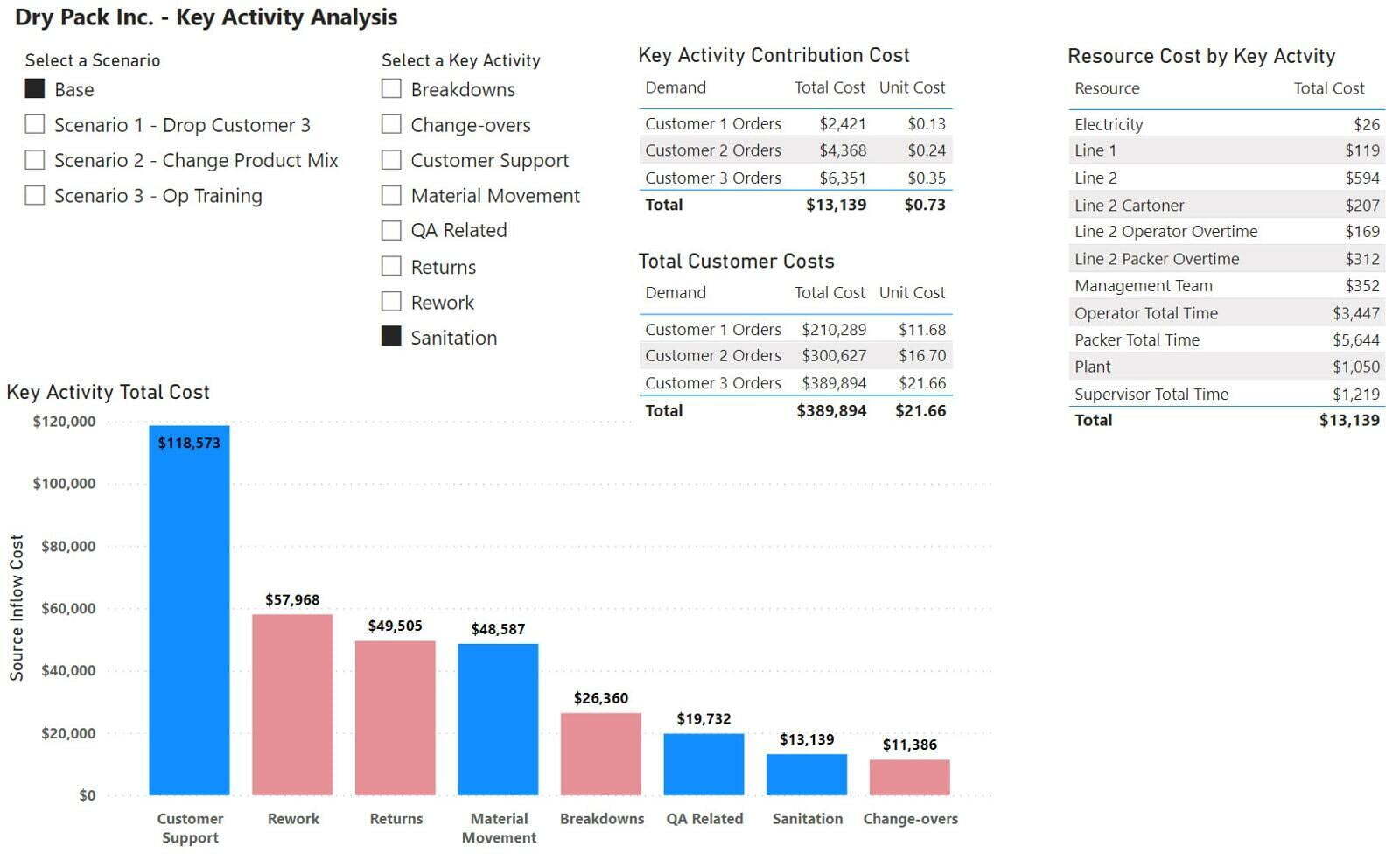
Figure 2. Illustrative Key Activity Cost Analysis Dashboard (via Power BI)
Benefits Realized
The initial DTO provided a series of new insights for Crosby Foods including:
- New data on production line utilizations and downtime improvement opportunities for one major product line resulting in an additional 192 hours of annual production capacity
- Identification of the labour time and cost of sanitation resulting in changes to staffing and procedures which reduced downtime and increased production capacity by over 200 hours annually
- Recognition of which products were being over and under costed using traditional costing techniques. This provided valuable information for product pricing, profitability analysis, and prioritization of future optimization efforts
- Development of a business case for justification of capital investment in a new plant management platform (SafetyChain) to reduce manual data collection times and errors/redundancies for improved production, QA, and compliance management. The DTO was used to help calculate the expected 50% ROI on this investment
- Appreciation for the operational and financial impacts of non-value-added process activities
The initial DTO was subsequently expanded and used for the annual operational and financial budgeting process including the costing of new products based on projected existing and new customer requirements. This forecasting capability enabled Crosby Foods to more accurately predict total production line shift requirements as well as exact labour and raw material costs.
Summary
Implementation of CBP on the Qualiware platform have allowed Crosby Foods to deliver on many of Gartner’s stated benefits of a DTO by creating a digital twin of their diverse manufacturing processes.
This enabled them to better understand resource deployment (and associated costs) and, more importantly, provide a capability for “what-if” simulations to increase business operations resiliency.
About CBP-Software:
CBP-Software is a Canadian software company providing innovative DTO simulation technology, training, and implementation coaching services on the Qualiware platform to both private and public-sector client worldwide.
Learn more about CBP-Software at: https://cbp-software.com
Disclaimer: The views and opinions expressed in the above article are those of the author. They do not necessarily represent the views of QualiWare.